Nigeria has a money problem. Not a shortage of it, but an unequal distribution of who gets to earn, own, and grow it.
Half of the country’s population is female. According to Oxfam, women represent 60 to 79 per cent of Nigeria’s rural labour force but are five times less likely to own the land they work. The woman waking at dawn to tend the farm, process the food, and carry produce to market does not even own the land she works on. She builds wealth for everyone except herself.
This is not just a gender issue. It is an economic challenge. The theme for International Women’s Month, “Give to Gain,” is not a feel-good slogan. It’s actually a very practical economic idea.
Let’s Look at the Numbers
Globally, the McKinsey Global Institute estimates that advancing gender equality could add $12 trillion to global GDP. This is not charity. It is compound interest on an investment the world has been refusing to make.
In Africa, advancing gender equality could add $316 billion to GDP. Yet a 2024 Mastercard Foundation report found that young women’s contribution to Africa’s GDP fell from 18 per cent in 2000 to 11 per cent in 2022. Progress is stalling and, in some cases, moving backward, which means economies are missing out on productivity, entrepreneurship and innovation.
In Nigeria, human capital wealth for women stands at just 35.7 per cent of the value for men. Women are expected to earn slightly more than a third of what men earn over their working lives. They make up roughly half the adult population but hold only 26.3 per cent of human capital wealth. The gap is not a crack. It is a chasm.
The Hidden Cost of Exclusion
Financial exclusion carries real costs. Rural women provide 60 to 80 per cent of labour in agriculture and rural development. They form the backbone of Nigeria’s food production. Women supply 70 per cent of agricultural labour and 60 per cent of food processing yet have access to only 20 per cent of available agricultural resources. They produce the nation’s food without the tools, land, or capital to scale their work.
The financial sector tells a similar story. Female entrepreneurs make up over 58 per cent of Africa’s self-employed population but receive only about 3 per cent of start-up financing. Nigerian women run businesses, employ people, and feed families while being largely shut out of formal investment.
When women cannot access credit, own property, or build estates, the consequences affect multiple generations. Families struggle to build lasting wealth. Children grow up without financial safety nets. The cycle repeats.
The Benefits of Investing in Women
Countries and companies that invest more intentionally in women are already seeing the results. A 2024 McKinsey report found that African firms with gender-diverse leadership were 20 per cent more likely to outperform peers in profitability. Inclusion is good for the bottom line.
The IMF highlights that reducing gender gaps in labour force participation and financial inclusion could yield GDP gains of up to 35 per cent in countries with large disparities. Nigeria, with one of the widest gender wealth gaps on the continent, stands to gain enormously.
Providing financial education to women results in investments in households. Access to loans allows them to build businesses that employ others. Owning assets and planning estates properly ensures wealth actually gets passed down. Women with access to finance are more likely to invest in health, education, and community wellbeing. This multiplier effect makes gender-inclusive finance a powerful tool for achieving development goals.
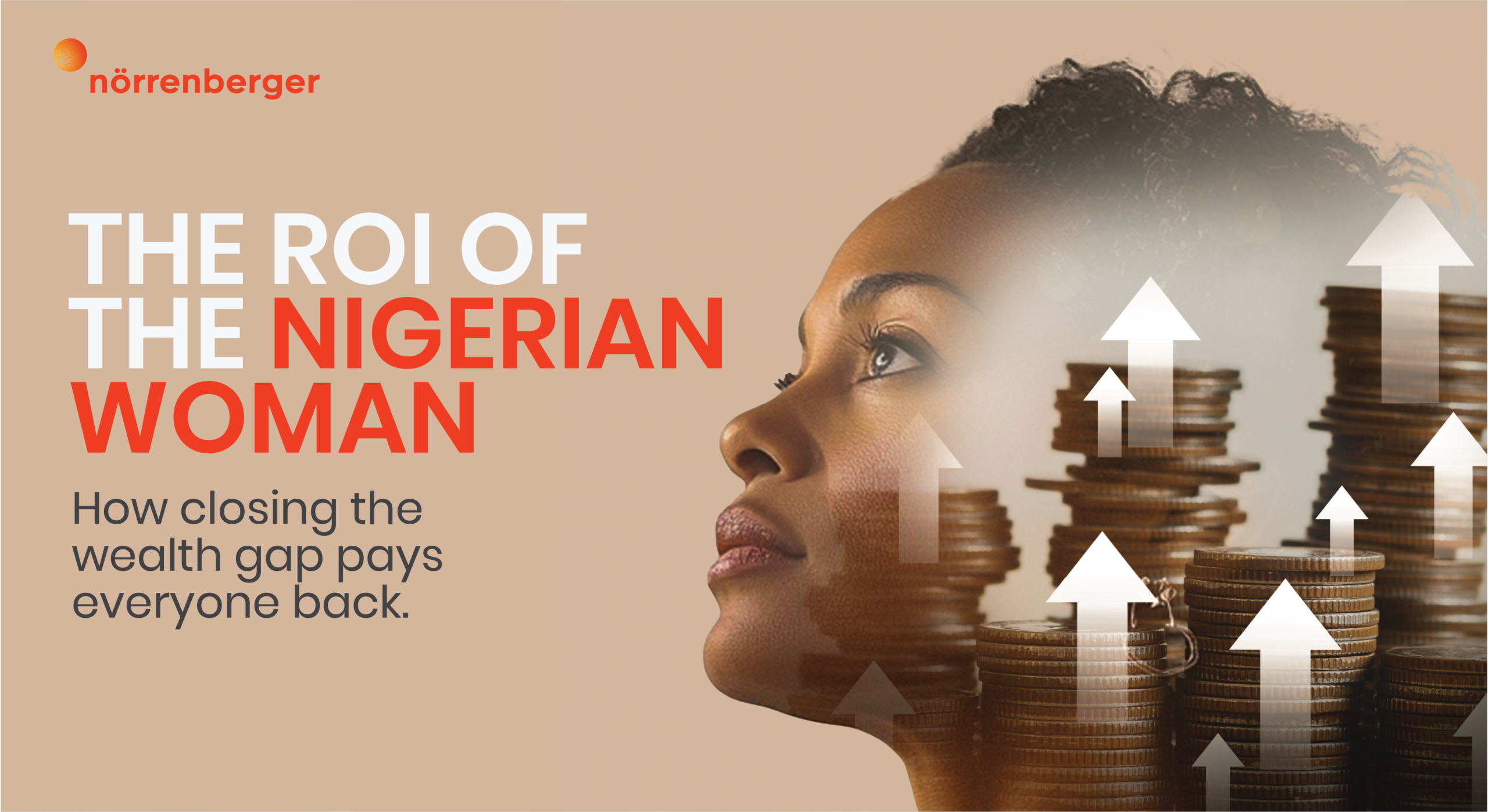
This is the ROI of the Nigerian woman. It benefits her, her children, her community, and the country’s economy.
What Needs to Change
The barriers are documented and addressable. Limited access to formal financial accounts, cultural norms restricting property ownership, low financial literacy, and a legal framework that leaves women’s assets unprotected during divorce or after a spouse’s death are among the biggest challenges.
Progress begins with visibility. It deepens when women are given real financial tools, not just awareness campaigns. Investment products, trust structures, wills, and estate planning are not luxuries reserved for the wealthy. They are instruments of economic protection that every woman in Nigeria deserves.
The Gain Is Real
This International Women’s Month, “Give to Gain” invites us to reconsider what investment looks like. Investing in women’s financial inclusion is not a social welfare gesture. It is arguably the highest-return investment Nigeria can make.
The woman working the land, running the market stall, managing the household, and building the business is not a beneficiary waiting to be empowered. She is an economic engine ready for the right fuel.Provide her access, ownership, and a plan. The returns will speak for themselves.
At Norrenberger, we believe financial security should be accessible to everyone. Through investment solutions, financial planning, and long-term wealth protection tools, individuals and families can take practical steps toward building lasting prosperity.