
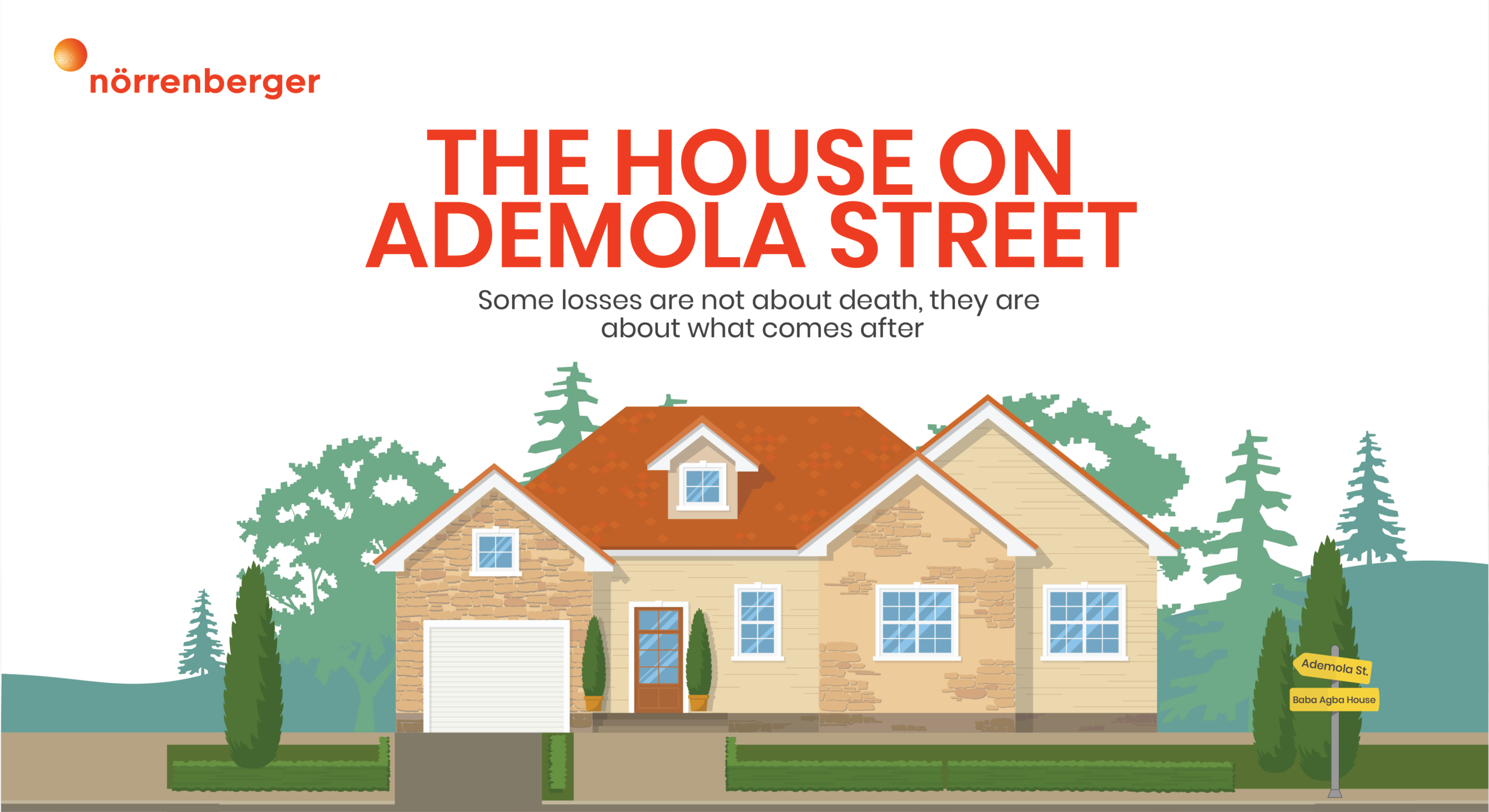
Everyone called my grandfather Baba Agba. He was the kind of man who filled a room without trying, You could hear his voice from the front gate before you even knocked. He built our family home on Ademola Street with his own hands and his own money, brick by brick, in 1971. That house was not just a building. It was where every Christmas happened, where cousins met for the first time and where my grandmother made pepper soup that people still talk about. It was the centre of everything.
Baba Agba died in 2011. He was eighty-one. What he had not done, in all those years, was write a will. There was no trust, no estate plan, no legal arrangement of any kind. Just a house full of memories and six children who each believed they understood what their father would have wanted.
They were wrong about that last part.
The first disagreement came at the funeral. Barely a week after we buried him, my uncle suggested the house should be sold and the proceeds split equally. My father refused. My aunt saw things differently. Within a month, quiet tension became open conflict – phone calls stopped, Sunday lunches stopped and cousins who had grown up together like siblings suddenly stopped seeing each other.
I was nineteen, the youngest in the entire family. I sat in corners of rooms and watched adults I had loved my whole life become strangers to each other over a property none of them could legally claim without a court process.
The lawyers arrived the following year. The process is called probate, the legal process of determining what belongs to whom when someone dies without proper arrangements. It was slow, costly and exhausting. Each sibling hired their own representation. The fees mounted. The family’s pain became glaring by the day.
By 2015, the house on Ademola Street was ordered to be sold. The money was divided. Nobody was satisfied. My grandmother never spoke about it. She did not have to. You could see it in her face every time someone mentioned the house.
None of it had to happen that way.
This is exactly what estate planning is meant to prevent. Simple steps like writing a will, setting up a trust and putting clear legal structures around what you own can save families from this kind of outcome. A will would have documented my grandfather’s wishes clearly, leaving no room for interpretation or argument. A trust would have gone further, placing the house under legally binding instructions that no sibling or court could easily overturn. Together, they protect everything a person spends their life building.
Many Nigerians assume these things are for the wealthy or the elderly. My grandfather’s story is proof that they are for anyone who owns anything and loves anyone. A family home, a savings account, a small business, all of it deserves a plan.
The process is also simpler than most people imagine. It often starts with a simple conversation, followed by guidance through the legal steps. Just an honest discussion about what you have and who you want to protect.
My grandfather was not a careless man. He simply did not know that love alone is not enough. Protection requires a decision, made deliberately, while you still can.
The last time I drove past Ademola Street, a different family was living there. I slowed down, looked at what used to be ours, and kept driving.
Some things, once lost, do not come back.