
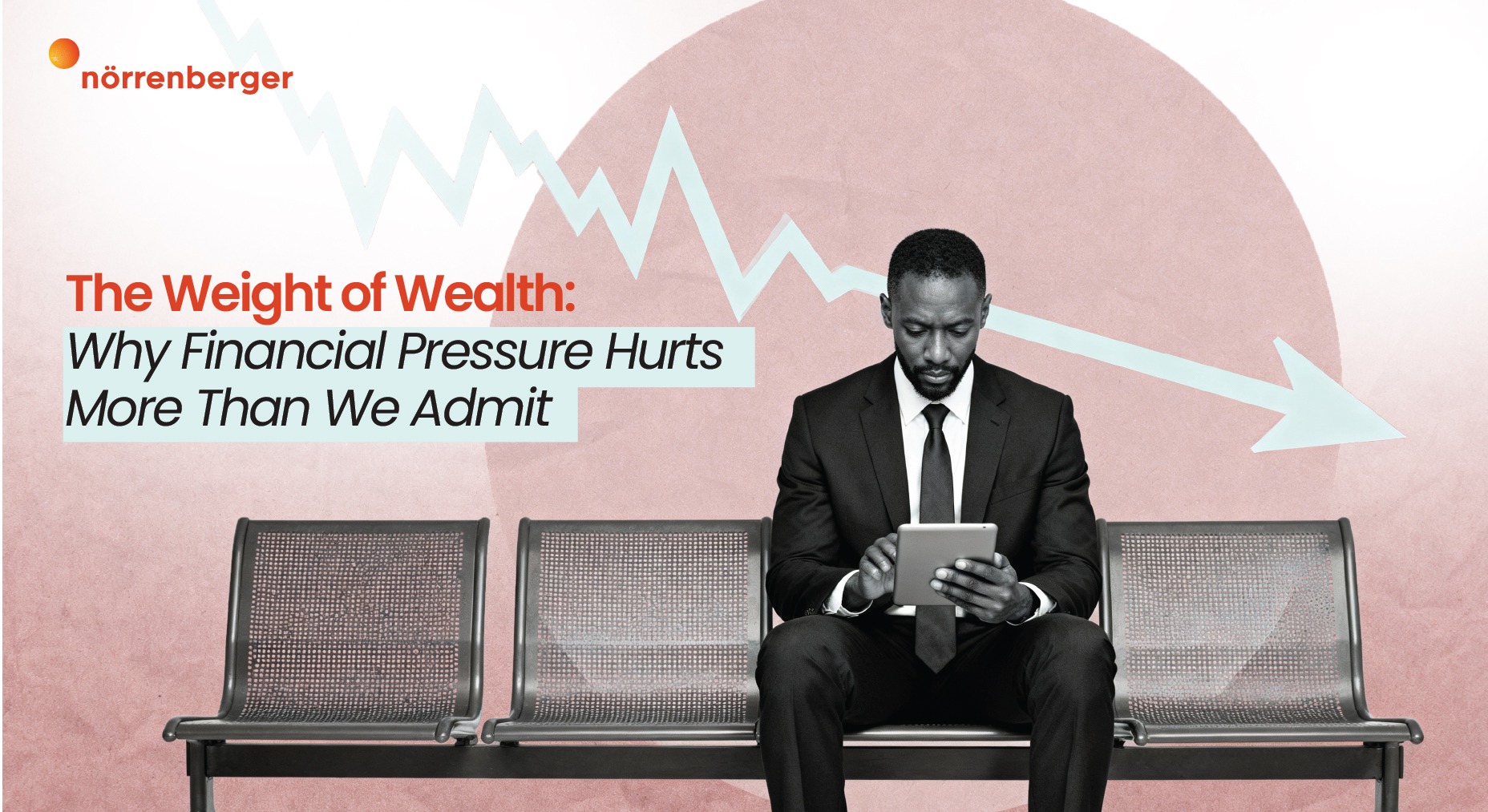
Simi sat at her desk, heart pounding. She had woken up at 4 a.m., as she often did, to scan stocks, check forex rates, and review her portfolio. She told herself it was discipline that she had to stay ahead. Yet deep inside, she felt hollow. When her phone rung with another alert about targets unmet, she swiped it away with irritation. She had promised herself she would rest this weekend. Instead, she found herself replaying figures in her head, wondering what people would think if her wealth collapsed, fearing failure that hadn’t even happened.
A few months earlier, she would have laughed at the idea that money problems could affect mental health. She thought she could compartmentalize, keep her emotions separate from her ambitions. She believed exhaustion was a sign of commitment and that emotional distress was a luxury for the weak. But now, something in her was unravelling.
Financial stress rarely announces itself loudly. It seeps quietly into daily life, disguised as productivity or ambition. What begins as a desire to achieve often morphs into anxiety about not doing enough. It shows up in sleepless nights, strained conversations, and a constant feeling of inadequacy. For people like Simi and for so many others, money stops being a tool and starts becoming a measure of self-worth.
In Nigeria, where hustle culture thrives, it’s easy to believe that rest is for the unmotivated. Success stories dominate social media feeds; new cars, luxury homes, and “seven-figure” milestones. The pressure to match up is relentless. When life doesn’t reflect those glossy images, the mind begins to crumble under invisible comparisons. People whisper to themselves, Am I falling behind? Why can’t I do more? and in silence, they spiral.
Tunde, a young 29-year-old graphics designer, knows this feeling too well. He took on extra projects to increase his income, thinking it would bring him peace. As deadlines multiplied, his anxiety grew sharper. He could no longer tell whether his heart was racing because of Nigeria’s falling economy or mental fatigue. Many like him equate success with sleeplessness and burnout with progress. It’s a dangerous illusion that traps countless people in cycles of performance and depletion.
Despite this, conversations about mental health remain muffled. Too many people still think therapy is for “others,” or that asking for help signals weakness. They say things like, “I’ll rest when I retire,” or “I’m too busy to think about that.” Yet ignoring mental health doesn’t make it disappear. It only deepens the silence and the strain. In Nigeria, where access to mental health services is already limited, such stigma leaves many suffering quietly, convinced that their struggles are personal failures rather than human experiences.
Simi reached her breaking point one Saturday when she snapped at her mother over a simple phone call. The shame that followed was heavier than any financial worry she’d ever known. That evening, she did something new. She opened her journal and began to write, not about profits or targets, but about how she felt. She admitted to exhaustion. She booked a session with a therapist she found online and told two close friends she was struggling. Those small steps marked the beginning of her healing.
Addressing the link between money and mental health requires courage. It begins by naming the pressure – admitting when the weight of expectations feels unbearable. It means setting boundaries with work and finances, recognising that rest is not wasted time but a form of recovery. It means talking, sharing, and seeking professional help when needed. Healing starts when we stop pretending and start acknowledging that our minds need care as much as our ambitions do.
This year’s World Mental Health Day theme, “Access to Services – Mental Health in Catastrophes and Emergencies,” reminds us that care should never be a privilege. Life’s emergencies are not always visible, sometimes, they unfold quietly inside our minds, beneath the surface of daily routines. Financial stress, though gradual, can feel like a slow-moving crisis. The systems we build in our workplaces, our communities, and within companies like ours must make care accessible, normal, and valued.
Simi now wakes up differently. She still checks her portfolio, but she also checks in with herself. She budgets not only money but rest. She invests in her well-being as intentionally as she does her assets. Her mind, once her greatest battlefield, is now something she protects.
Money can open doors and build opportunities. Without a healthy mind, even success feels hollow. True wealth is more than numbers; it’s balance, purpose, and peace.
As we mark this Mental Health Week, may we remember that caring for our minds is not indulgence, it’s survival. Mental health is not a phase or a trend. It is part of being human. And if you carry pressure because of money, you are not alone, and help is never a weakness.