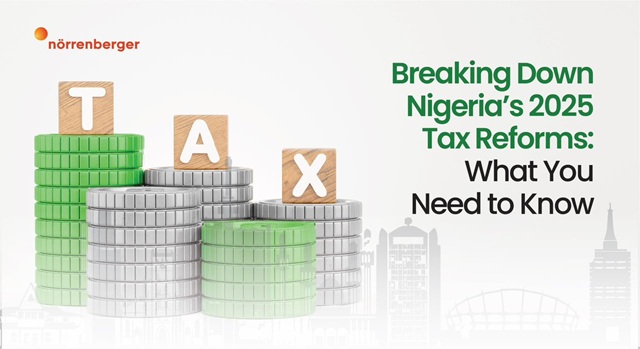
In a major move to improve Nigeria’s tax system, President Bola Ahmed Tinubu has signed four new tax laws that will reshape how individuals, businesses, and the government handle taxes.
The newly enacted laws -the Nigeria Tax Act (NTA), Nigeria Tax Administration Act (NTAA), Nigeria Revenue Service Act (NRSA), and Joint Revenue Board Act (JRBA) -come into full effect in January 2026 and aim to create a more equitable, efficient, and transparent tax system.
These laws are the result of almost two years of work by the Presidential Committee on Fiscal Policy and Tax Reforms, led by tax expert Taiwo Oyedele.
The goal? To make taxes fairer, simpler, and more effective.
Here’s what these changes mean for you – whether you’re a business owner, an employee, or just curious about how this will affect the economy.
- VAT stays the same, but the rules are smarter
The VAT rate is still 7.5%, but how it works has changed to help businesses:
- Businesses can now recover VAT on almost everything they buy – goods, services, and even equipment – as long as it’s used to produce taxable products or services.
- E-invoicing is now a must. This means businesses must issue electronic invoices that can be tracked in real time, reducing fraud and improving transparency.
- More basic items are VAT-free. This includes food, medicine, educational materials, electricity transmission, and tuition. It means lower prices for consumers and savings for companies.
- VAT sharing has changed. States and local governments will now get a bigger share (55% and 35%), while the federal government gets 10%. This encourages states to grow their economies and collect more tax.
- Small Businesses Get a Break, Big Companies Pay More
- Small companies (under ₦50 million in revenue) no longer have to pay Company Income Tax, Capital Gains Tax, or the new Development Levy.
- Capital Gains Tax (CGT) – the tax on profit from selling assets like property or shares – has increased from 10% to 30%. This closes a loophole where companies were paying less tax by calling business profits “capital gains.”
- Even foreign share sales can be taxed now if they involve Nigerian companies. So selling a foreign company that owns a Nigerian business may be taxed in Nigeria.
- Large corporations and multinationals (especially those earning over N50 billion or with global income above €750 million) will now face a minimum tax of 15% – even if they try to pay less in low-tax countries.
- New Personal Income Tax Rates: The More You Earn, the More You Pay
A new tax system is being introduced for individuals:
- The first N800,000 of your annual income is tax-free.
- Income is then taxed in steps:
- Next N2.2 million at 15%
- Next N9 million at 18%
- Next N13 million at 21%
- Next N25 million at 23%
- Anything above N50 million at 25%
This is called a progressive tax system – the more you earn, the higher the tax rate on your income. There are also reliefs for things like pension contributions, health insurance, and rent (up to N500,000).
- Development Levy: Where It’s Going
All large companies will now pay a 4% Development Levy on their profits. The money will be used to support national priorities like:
- Tertiary education
- Student loans
- National defense
- Science, technology, and cybersecurity
This replaces various old levies and focuses the funds on important projects.
- New Incentives for Priority Sectors
The government is replacing the old tax holiday (called Pioneer Status Incentive) with something called the Economic Development Incentive (EDI). Companies in key industries (like manufacturing, especially renewable energy) can get a 5% annual tax credit for five years if they invest in building their businesses.
However, industries like e-commerce and telecoms are no longer included, since they’re considered mature and already profitable.
So, What’s the Big Picture?
The 2025 tax reform is all about making taxes fairer, simpler, and more effective. It aims to:
- Make compliance easier for honest taxpayers
- Increase government revenue
- Reduce loopholes for tax avoidance
- Encourage investment in key sectors
- Support the economy with better use of public funds
But like every reform, success will depend on how well it’s implemented. Good policies need strong execution – and that’s what we’ll all be watching for in 2026 when the changes officially kick in.
Need to Understand How These Reforms Affect You or Your Business?
Our team of experts is available to guide you through the implications and opportunities of Nigeria’s new tax regime or download our H2 2025 Norrenberger Economic Report – here.
Contact us: research@norrenberger.com
Learn more: www.norrenberger.com